Yesterday I had a great conversation with an old friend Jason Knight. We worked together at Kendara and recently he was the founder and CEO of Wesabe.com . I told him about my plans for upStart.in as an incubator modeled loosely around the YCombinator concepts.
He was super supportive and as our conversation developed he talked at some length about some of the opportunities he sees in software for the retail segment based on his experience helping his wife run a chain of woman's clothing stores called Sway. While he has some vision for how a business in this direction could unfold, how it would develop a sales channel, who potential partners could be, and what the product might look like, this isn't a business he is interested in running. Jane and Jason recently had a second son and between family and helping with Sway his plate is full. Still, if I was incubating a company in this space he might be able to provide investment and advice.
This is indicative of many successful founders I've met who have more ideas than time. It kills them not to be able to express the creativity they feel, and often these are exactly the people you would want involved in a startup were you to do something in their field of interest. It could be a good niche for me to fill with upStart - matchmaking between successful time constrained entrepreneurs on the west coast and teams of eager young entrepreneurs in India excited about the same ideas.
While there's enough magnetic potential between these two populations to make the effort worth while, there are some serious risks. The primary one deals with the concept of entrepreneurship. Jason is clear that he doesn't want to run a company. He has lots of opinions: how the software should look, how the business model would look, what partners to go after..., but these are just opinions, an entrepreneur needs to validate them and ultimately come up with opinions of her own.
So, that seems to be the trick. We know we want to do something in a specific area. We have some vision for how it might look. But really, we need to find entrepreneurs who have similar vision and are willing to dedicate themselves to it. This is the difference between upStart and oDesk. Identifying these kinds of teams and structuring these deals will be a large part of the work I do with upStart.
I guess this isn't so unique. Paul Graham recently posted a long list of ideas he would like to fund.
Soon after I sold Kendara I went to Jon Feiber at MDV with the idea of starting an incubator. His point was that if he was interested in a space X he wouldn't start a company, he would go find an expert in the field of X and back him to start a company.
Friday, August 22, 2008
Tuesday, August 19, 2008
Incubation Centers & Academic Institutions
This morning I met with a business school in Pune to discuss the incubation center they are planning. I attended and talked at a workshop at SINE IITB a couple months ago. The sentiments I expressed on both occasions were similar, so I thought I'd share them here.
Hire a Professional.
By definition incubation involves working with less experienced entrepreneurs who need more non-financial guidance and support than business people who have successfully built and sold businesses before. By involving an experienced entrepreneur the incubator can provide this kind of support. I don't know if there's another way.
Focus on the exit.
After having a number of investments hang out in the 'living dead' category, I am totally convinced investors need to have some vision for how they are going to exit their investments before going in. This seems obvious, but its easy to ignore
since its much easier to find an entrepreneur with an idea and a need for money, than a corporate development executive who's willing to spend significant cash for that entrepreneur, his idea and the code he was able to produce with the investor's help. My feeling is this is one of many factors which skews the industry towards "professionals". Professionals can afford to develop relationships with those organizations that have the wherewithal to make these kinds of acquisitions, individual first time entrepreneurs and small time angels don't. An incubation center can develop these relationships, but it takes effort, and most don't even try.
Make it up in volume
India seems to have a variety of funding sources and financial incentives available to academic institutions who set up incubators. The funding doesn't appear to be tied to the number of companies incubated or their success. From an academic point of view having a smaller number of companies occupy the available offices for a longer period of time is the easiest way to fill the requirements. Its also possibly the worst algorithm for have Google type successes. In contract the YCombinator works a large number of companies for a very finite about of time ~4 months, and then everybody 'graduates' some fail, some succeed, and the YCombinator focuses on finding another group of companies to work with. Its indicative of a 'fail fast' mentality which is more prevalent in the Silicon Valley and needs to take root here in India if the culture of technical innovation is to thrive.
Encourage Inter-Department Dating
Most of the entrepreneurial teams I've seen so far consist entirely of engineers. Occasionally I meet business students who have aspirations of starting their own companies. These groups don't seem to have any social overlap. I would include marketing people and designers in this mix as well. We know a successful startup will have elements from all these groups, but the petri dish we're coming out of appears very segregated at this stage. Its one reason startup 'mixers' are so
important. Its a place where potential founders from varied backgrounds can meet. Facilitating these interactions and events can be an important role for an incubation center. The trick is how to make it interesting for a wide range of people whose only commonality is a desire to start a business.
Critical Mass
There seems to be a pervasive desire in B-Schools to imbibe a sense of entrepreneurship in their student populations. In Palo Alto in the late 90s it seemed everyone you met had start-up aspirations, and at some point it just wasn't hip to cool your heals in a big company indefinitely. My sense is to get the same culture established at a b-school, you might need to import entrepreneurs so that you could make sure the start-up perspective was being represented and defended in the cafeteria and at parties. Co-hosting an incubation center at the university could do this, but there would need to be an openness to accepting outsiders. Manifesting a cultural shift with people from within will be difficult.
Hire a Professional.
By definition incubation involves working with less experienced entrepreneurs who need more non-financial guidance and support than business people who have successfully built and sold businesses before. By involving an experienced entrepreneur the incubator can provide this kind of support. I don't know if there's another way.
Focus on the exit.
After having a number of investments hang out in the 'living dead' category, I am totally convinced investors need to have some vision for how they are going to exit their investments before going in. This seems obvious, but its easy to ignore
since its much easier to find an entrepreneur with an idea and a need for money, than a corporate development executive who's willing to spend significant cash for that entrepreneur, his idea and the code he was able to produce with the investor's help. My feeling is this is one of many factors which skews the industry towards "professionals". Professionals can afford to develop relationships with those organizations that have the wherewithal to make these kinds of acquisitions, individual first time entrepreneurs and small time angels don't. An incubation center can develop these relationships, but it takes effort, and most don't even try.
Make it up in volume
India seems to have a variety of funding sources and financial incentives available to academic institutions who set up incubators. The funding doesn't appear to be tied to the number of companies incubated or their success. From an academic point of view having a smaller number of companies occupy the available offices for a longer period of time is the easiest way to fill the requirements. Its also possibly the worst algorithm for have Google type successes. In contract the YCombinator works a large number of companies for a very finite about of time ~4 months, and then everybody 'graduates' some fail, some succeed, and the YCombinator focuses on finding another group of companies to work with. Its indicative of a 'fail fast' mentality which is more prevalent in the Silicon Valley and needs to take root here in India if the culture of technical innovation is to thrive.
Encourage Inter-Department Dating
Most of the entrepreneurial teams I've seen so far consist entirely of engineers. Occasionally I meet business students who have aspirations of starting their own companies. These groups don't seem to have any social overlap. I would include marketing people and designers in this mix as well. We know a successful startup will have elements from all these groups, but the petri dish we're coming out of appears very segregated at this stage. Its one reason startup 'mixers' are so
important. Its a place where potential founders from varied backgrounds can meet. Facilitating these interactions and events can be an important role for an incubation center. The trick is how to make it interesting for a wide range of people whose only commonality is a desire to start a business.
Critical Mass
There seems to be a pervasive desire in B-Schools to imbibe a sense of entrepreneurship in their student populations. In Palo Alto in the late 90s it seemed everyone you met had start-up aspirations, and at some point it just wasn't hip to cool your heals in a big company indefinitely. My sense is to get the same culture established at a b-school, you might need to import entrepreneurs so that you could make sure the start-up perspective was being represented and defended in the cafeteria and at parties. Co-hosting an incubation center at the university could do this, but there would need to be an openness to accepting outsiders. Manifesting a cultural shift with people from within will be difficult.

Saturday, August 16, 2008
Vipassana
Markha Valley Pics
Leh Pics
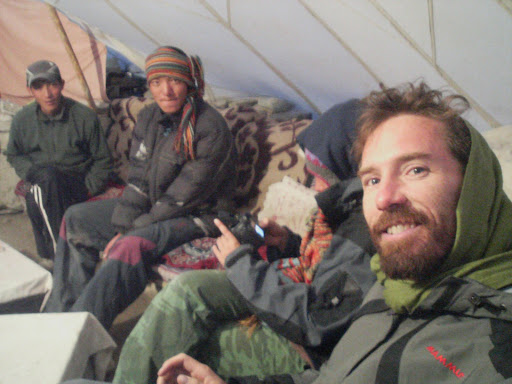
A couple days after finishing the Markha Valley trek in Ladakh I boarded a bus with a bunch of other travelers and headed out to a remote meditation center in Tamisgame 4 hours from Leh.
I rode on the roof of the bus with a few locals most of the way. It is by far the most fun way to travel. Apricots are in season and we grabbed large handfuls of them from low hanging branches we drove under. The local guys on the roof with me had some kind of repoire with everyone we drove past, and a couple of girls threw a big bucket of water at us.
fun fun.
I'd been nervous about the course because my knees start to hurt sitting still for even one hour and I had always thought that in 10 hours of seated meditation I would irreparably damage them.
In Varanasi I had a couple occasions to sit cross legged for long periods listening to a yogi expound on the tantric wisdom of the universe. During the discourses my knees hurt, but I got clear that it was more of a muscle thing than a joint thing, and somehow that made me feel better about it.
The meditation center just up valley from the Maha Bodhi School in Tamisgame was simple and gorgeous. Boys and Girls dorms were on opposite sides of the valley. The kitchen was at the bottom and the meditation hall at the top. Towering Himalayan mountains surrounded us on all sides.
The meditation vibe was more relaxed than I had anticipated. For the first few days there were no strong instructions keeping us from changing our sitting position, so whenever we were uncomphortable we shifted. Easy. Some of the meditations were longer than I expected from 4:30 - 6:30 am all in one go. The other sessions were 3 and 4 hours in total, but 5 - 15 minute breaks were given every 60 - 90 minutes.
On the fourth day the concept of 'Strong Determination' was introduced with which we were instructed to make every effort to sit completely still and not change position for the 3 one hour "group" sittings. I found that I could handle 1 hour ok. A few times I tried to remain absolutely still for the 90 minute sits, but I found that my knees ached significantly after.
A large part of the technique deals with observing sensations and learning how to deal with them without instantly reacting. There's an aspect to this that I really appreciate. When I'm working I feel I frequently lose focus by following some small sensation 'I'm thirsty, I have to pee, I'd like to take a walk ...' where I feel some benefit to simply observing the thought / sensation and then getting back to work.
There was (for me) a slightly strange emphasis on not doing other exercises. Particularly forbidden were yoga and Tai Chi. The point seemed to be to concentrate on the Vipassana technique and not cloud it with other practices. For me, I felt that my yoga practice enabled me to gain the confidence to sit still for long periods of time. And I was desperate to stretch during the 10 day course simply to alleviate the aches in my legs and back. As it was I sorta sheepishly stretched without doing 'assana' but felt I was neither completely obeying the spirit of what was being asked for or completely caring for my body the way I would have liked.
That said, I felt very healthy for the whole time. The aches were relatively minor. The food was good. I didn't miss having a real dinner, and waking up at 4am proved a non issue. While there are only 3 longish breaks during the day, I took naps during them, so didn't feel short on sleep at all.
On the eighth day around lunch I felt some sort of epiphany along the lines of:
"I don't need to think at all, just be aware of my body and whats going on around me"
Shortly after that my ability to meditate took a strong turn for the worse, and I struggled through the remaining day having difficulty focusing.
The kinds of thoughts I had surprised me. I had the expected thoughts about the future, getting an incubator going and different things I could do to help that process forward. The other types of thoughts were tended towards obsessing about stupid things I did when I was a kid I feel guilty about.
Unlike more 'spiritual' traditions Vipassana doesn't really address sin and forgiveness. Its more about observing whatever sensations you have and realizing that it will pass.
Talking later with an Israeli girl I mentioned that a large part of the Christian tradition is based on dealing with issues of guilt "Christ died for your sins"
Buddha clearly had other issues. "There is suffering, There is a way out of suffering" definitely a different vibe.
All together it was a good experience. While on day 8 my mind felt very clear, by the last day my mind felt cluttered again. Some benefits appear lasting tho. Previously I had rarely been able to sit on my own more than a few minutes before getting distracted. Now sitting is easier. I see the distractions come up, but its easier for me not to immediately react to them.
I also notice an increased tendency to pause and look into how I'm feeling when I'm feeling stressed or unhappy.
The crew doing the course was solid, and we had a good time chatting afterwards. A major storm blew thru the last few days and washed out a bridge. So we had a bit more of an adventure getting back into Leh. The last wisps of that storm canceled my flight back to Pune thereby postponing some meetings and changing my plans for returning to the states.
Anitcha, everything is changing.
Murray Freeman
Recently I got a random email from someone
who had (almost) the same name as me
and happened to be visiting pune
Yesterday I had tea with Murray Freeman
and his friend Rishi. Turns out
they're deep wifi geeks and that Rishi has also been involved in a
number of social project around Pune including at the Vigyan Ashram
where I have also spent considerable time.
Incidently, order matters in Google search results.
The top 5 hits on "Freeman Murray" are of me, while
my new friend Murray Freeman gets the top spot for
searches for "Murray Freeman"
who had (almost) the same name as me
and happened to be visiting pune
Yesterday I had tea with Murray Freeman
and his friend Rishi. Turns out
they're deep wifi geeks and that Rishi has also been involved in a
number of social project around Pune including at the Vigyan Ashram
where I have also spent considerable time.
Incidently, order matters in Google search results.
The top 5 hits on "Freeman Murray" are of me, while
my new friend Murray Freeman gets the top spot for
searches for "Murray Freeman"
Sunday, July 27, 2008
Down from the Mountain
Today we finished our 6 day trek thru the mountains of Ladok. About 5 of those days we hiked for 7 or so hours thru gorgeous river mountain valleys.
My phone / camera is on the fritz since I dove into the river to save my friends shoes which I had failed to toss accross.
My time in Leh, as with my time in Varanasi makes me feel I should be spending more time exploring India while I am here. It's such a varied and beautiful country.
Now I'm looking into 10 day Vipassana meditation courses for early August. Then I'll be meeting with Jim Forrester to discuss some of his plans for doing community wireless networking in India.
Then Burningman
Then TechCrunch50
Fun Fun
My phone / camera is on the fritz since I dove into the river to save my friends shoes which I had failed to toss accross.
My time in Leh, as with my time in Varanasi makes me feel I should be spending more time exploring India while I am here. It's such a varied and beautiful country.
Now I'm looking into 10 day Vipassana meditation courses for early August. Then I'll be meeting with Jim Forrester to discuss some of his plans for doing community wireless networking in India.
Then Burningman
Then TechCrunch50
Fun Fun
Monday, July 21, 2008
Ladok - Delhi - Varanasi - Update
Tomorrow we're starting a trek. Its the Maka valley trek or something like that, and we'll be walking 6 or 7 hours a day for 6 days.
Today we hiked around Leh. Walked up to some old monestaries over looking the city, and ate momo's. I feel alittle silly that I haven't spent more time in the mountains in the 3+ years I've been in India.
Bummed that my camera has this proprietary nokia connector instead of std usb.
Proto was good. Before I left Varanasi I got business cards made and put a simple static site up (upstart.in). It was a good exercise too in getting precise with my description of who I intend to work with and what I do.
Before proto we hung out at the Yoga Mandir in Varanasi (Asi Ghat) for almost a week.
I highly recommend that place if anyone is trying to figure out where to stay over there. The river is flooded so the main walk along the ghats is a no go.
Open Hand cafe is a nice little wifi hot spot in Asi, makes me think I could live there for awhile.
I sent in an email application for the August 10 Vipasana, but haven't heard back.
So its probably a no go. Right now Looks like I'll probably chill in Pune for the first 10 days of August and then go home (usa) for a month.
Bought tickets to techcrunch50.com. Gearing up for a fall launch of upstart(.in)
Just saw that YCombinator is listing ideas they'd like to see. Maybe I'll do that too.
Today we hiked around Leh. Walked up to some old monestaries over looking the city, and ate momo's. I feel alittle silly that I haven't spent more time in the mountains in the 3+ years I've been in India.
Bummed that my camera has this proprietary nokia connector instead of std usb.
Proto was good. Before I left Varanasi I got business cards made and put a simple static site up (upstart.in). It was a good exercise too in getting precise with my description of who I intend to work with and what I do.
Before proto we hung out at the Yoga Mandir in Varanasi (Asi Ghat) for almost a week.
I highly recommend that place if anyone is trying to figure out where to stay over there. The river is flooded so the main walk along the ghats is a no go.
Open Hand cafe is a nice little wifi hot spot in Asi, makes me think I could live there for awhile.
I sent in an email application for the August 10 Vipasana, but haven't heard back.
So its probably a no go. Right now Looks like I'll probably chill in Pune for the first 10 days of August and then go home (usa) for a month.
Bought tickets to techcrunch50.com. Gearing up for a fall launch of upstart(.in)
Just saw that YCombinator is listing ideas they'd like to see. Maybe I'll do that too.
Wednesday, July 09, 2008
Some thoughts on technical mentorship, what I have done with the iAccelerator teams, and how I would like to handle this moving forward.
First, this has been a great experience. Over 80 applicants applied, and the 5 teams we selected to be a part of the program have been universally wonderful. In the selection process the CIIE team first narrowed down the list to about 20 applicants who we then had a phone interview with. During the phone call I was able to establish whether we could communicate well and learn enough about the idea to form an opinion about whether it was doable. One of the main factors I filtered for was the level of partnership necessary to make the system successful. Ideas which required deep integration with banks and hospitals were non starters.
Once the teams came to campus I had conversations with most of them about what they were doing and made suggestions about how to the refine the ideas into something I considered more practical, achievable and marketable. About three of the teams changed significantly but still within the same general category they applied to the program with. Others already had significant code developed or were focused on their original idea and didn't want to deviate. This is perfect.
On an ongoing basis we do engineering reviews every week. My feeling is this is really important as it keeps everyone informed of the progress being made. It also provides weekly milestones for people to work towards, which has been useful to me in the development I have done.
With one team I spent alot of time working on their database design and explaining the MVC design pattern and helping them architect their app into packages and classes from the very beginning. I did a code review with another team much later in the program where we discussed different design decisions they had made and we looked at what could be refactored to reduce complexity.
Some teams were senior enough or working with technologies I was less familiar with such that I wasn't able to provide as much technical support during their development.
There's been some more subtle stuff I've been able to do such as encouraging
people to stick with their current idea when their confidence was shaking, and introducing them to potential partners and advisers.
One aspect of the program I have enjoyed, but wasn't responsible for, has been regular meetings with successful entrepreneurs who have come to talk to us about the process they went thru in starting their companies, picking an idea, finding partners, going to market, etc. These speakers have been first rate and have helped stimulate thinking in important areas that perhaps we hadn't spent enough time with.
***
So its been a great experience both for what I've been able to do, and showing me what I would like to do more of with future groups.
Going forward I think I'd like to engage with teams even more deeply in setting up their engineering and business processes. To the extent that an incubator is a startup factory the same issues of quality assurance, consistency, branding and sales come up that traditional businesses face.
We got really lucky with the level of entrepreneurs that came in. Doing this again I would spend more time during the interview / selection process. Basically, I need to feel that each person on a team could work for Google, if not now, with one or two years of aggressive experience. If I can manage to filter this reliably, then I'll have a portfolio of companies that could get acquired by Google (or anyone else) and they will come to know that most of my teams meet that level which makes my sales process easier. Identifying these people reliably will take more than a phone call. It will take a set of interviews and tests similar to what Google puts people through.
This process needs to be deep both for selecting the people I want to work with, and for informing the 'incubation' process in which I attempt to address the shortcomings teams may have. This may include looking out for other employees / partners / advisers that can help complete the team. On a technical level it will show how much effort I need to spend helping a team with its software design and developing its skills in specific technical areas bringing in outside trainers / consultants as necessary.
By selecting, monitoring and improving the teams we should be able to consistently create fundable / acquireable startups. Should be fun.
Once the teams came to campus I had conversations with most of them about what they were doing and made suggestions about how to the refine the ideas into something I considered more practical, achievable and marketable. About three of the teams changed significantly but still within the same general category they applied to the program with. Others already had significant code developed or were focused on their original idea and didn't want to deviate. This is perfect.
On an ongoing basis we do engineering reviews every week. My feeling is this is really important as it keeps everyone informed of the progress being made. It also provides weekly milestones for people to work towards, which has been useful to me in the development I have done.
With one team I spent alot of time working on their database design and explaining the MVC design pattern and helping them architect their app into packages and classes from the very beginning. I did a code review with another team much later in the program where we discussed different design decisions they had made and we looked at what could be refactored to reduce complexity.
Some teams were senior enough or working with technologies I was less familiar with such that I wasn't able to provide as much technical support during their development.
There's been some more subtle stuff I've been able to do such as encouraging
people to stick with their current idea when their confidence was shaking, and introducing them to potential partners and advisers.
One aspect of the program I have enjoyed, but wasn't responsible for, has been regular meetings with successful entrepreneurs who have come to talk to us about the process they went thru in starting their companies, picking an idea, finding partners, going to market, etc. These speakers have been first rate and have helped stimulate thinking in important areas that perhaps we hadn't spent enough time with.
***
So its been a great experience both for what I've been able to do, and showing me what I would like to do more of with future groups.
Going forward I think I'd like to engage with teams even more deeply in setting up their engineering and business processes. To the extent that an incubator is a startup factory the same issues of quality assurance, consistency, branding and sales come up that traditional businesses face.
We got really lucky with the level of entrepreneurs that came in. Doing this again I would spend more time during the interview / selection process. Basically, I need to feel that each person on a team could work for Google, if not now, with one or two years of aggressive experience. If I can manage to filter this reliably, then I'll have a portfolio of companies that could get acquired by Google (or anyone else) and they will come to know that most of my teams meet that level which makes my sales process easier. Identifying these people reliably will take more than a phone call. It will take a set of interviews and tests similar to what Google puts people through.
This process needs to be deep both for selecting the people I want to work with, and for informing the 'incubation' process in which I attempt to address the shortcomings teams may have. This may include looking out for other employees / partners / advisers that can help complete the team. On a technical level it will show how much effort I need to spend helping a team with its software design and developing its skills in specific technical areas bringing in outside trainers / consultants as necessary.
By selecting, monitoring and improving the teams we should be able to consistently create fundable / acquireable startups. Should be fun.
Friday, June 06, 2008
Tuesday, June 03, 2008
Devil's Advocate
This is a great term. I wish people would feel it more deeply when they succumb to the temptation of criticizing friends and colleagues who are trying to create something. Giving birth to a new idea has to be one of the most fragile psychological processes we go through as adults. When you talk to someone who is starting up, I encourage you to stretch your imagination to find those aspects of the venture which hold the most promise, and then to concentrate your attention and words in praise of that.
The devil will come, we need more angels.
The devil will come, we need more angels.
Monday, June 02, 2008
Active Investors
When we were raising money for Kendara we had a number of conversations with David Cowan of Bessemer ventures. He had funded Visto which was cofounded by a number of our friends from the Java group. One point I remember him making was that we were 'Assuming Success' which meant that the value of the system would be most apparent when it had achieved critical mass, but that it would be difficult to get this traction without already having it. I didn't agree with him in our case, but I have seen several startups making that mistake.
He was very busy, and said he couldn't be a primary investor on our deal, but that he would be interested in being a passive second investor. This sounded great to me as we already had very active interest from a couple of investors including Jon Feiber at MDV. In conversation with Jon, I mentioned the idea of a passive second investor, and he basically said, "yeah, I'd like to be passive too". But he wasn't and said that if we were going to get a second investor it needed to be someone very engaged in the business. We ended up working with him and Tim Haley of RedPoint Ventures.
Its a slight contrast with Paul Graham's philosophy. From YCombinator About
We try to interfere as little as possible in the startups we fund. We don't want board seats, rights to participate in future rounds, vetoes over strategic decisions, or any of the other powers investors sometimes require. We offer lots of advice, but we can't force anyone to take it. We realize that independence is one of the reasons people want to start startups in the first place. And frankly, it's also one of the reasons startups succeed. Investors who try to control the companies they fund often end up destroying them.
Both Tim and Jon had seats on the board and more than influenced certain actions like bringing on a CEO.
Paul et. all clearly contribute and I'm sure heavily influence a variety of decisions the founders make. Its interesting that they don't wire this kind of power into the terms. Maybe, with the small equity they have (2 - 10%), and the number of teams they process, they simply don't have time or incentive to fight, or take on the real (time consuming) responsibilities sitting on the board entails.
It works out right for the entrepreneurs too. Nevermind legal action, pissing off PG isn't going to be in the best interests of any founders career objectives. The equity is too small to get too worried about, and not having to worry about board approval or meetings is definitely a significant burden very small companies may be better off without, if they can get input in other ways.
EIR (Entrepreneur In Residence) programs at VCs seem to work on similar terms. Small amounts of money, lots of interaction and advice. Without specific legal restrictions prohibiting EIRs from working with other companies, the goodwill generated from the program creates a strong bias towards that VC. And again, its very reputation oriented.
He was very busy, and said he couldn't be a primary investor on our deal, but that he would be interested in being a passive second investor. This sounded great to me as we already had very active interest from a couple of investors including Jon Feiber at MDV. In conversation with Jon, I mentioned the idea of a passive second investor, and he basically said, "yeah, I'd like to be passive too". But he wasn't and said that if we were going to get a second investor it needed to be someone very engaged in the business. We ended up working with him and Tim Haley of RedPoint Ventures.
Its a slight contrast with Paul Graham's philosophy. From YCombinator About
We try to interfere as little as possible in the startups we fund. We don't want board seats, rights to participate in future rounds, vetoes over strategic decisions, or any of the other powers investors sometimes require. We offer lots of advice, but we can't force anyone to take it. We realize that independence is one of the reasons people want to start startups in the first place. And frankly, it's also one of the reasons startups succeed. Investors who try to control the companies they fund often end up destroying them.
Both Tim and Jon had seats on the board and more than influenced certain actions like bringing on a CEO.
Paul et. all clearly contribute and I'm sure heavily influence a variety of decisions the founders make. Its interesting that they don't wire this kind of power into the terms. Maybe, with the small equity they have (2 - 10%), and the number of teams they process, they simply don't have time or incentive to fight, or take on the real (time consuming) responsibilities sitting on the board entails.
It works out right for the entrepreneurs too. Nevermind legal action, pissing off PG isn't going to be in the best interests of any founders career objectives. The equity is too small to get too worried about, and not having to worry about board approval or meetings is definitely a significant burden very small companies may be better off without, if they can get input in other ways.
EIR (Entrepreneur In Residence) programs at VCs seem to work on similar terms. Small amounts of money, lots of interaction and advice. Without specific legal restrictions prohibiting EIRs from working with other companies, the goodwill generated from the program creates a strong bias towards that VC. And again, its very reputation oriented.
Sunday, June 01, 2008
cost of living India
One fascinating aspect of living in India is how economically diverse the population is and how the different classes coexist relatively harmoniously. When I first came to India I was on the full back packer path spending $4 / day for a nice room with attached bath on Sutter St. in Calcutta.
Then I moved to Pondichery and worked 6 hours a day for free food and lodging on the Solitude Farm inside Auroville.
In Delhi I spent $50 / night for a hotel, and in Bombay I paid about $1000 month for
an apartment in Bandra.
When I moved to Pune, initially rent was just $75 / month for a room in a gorgeous old bungalow on Lane 4. Since then I got one 2 bedroom place with Soum that was $200 / month, and later moved into a large 2BHK that overlooks the park that is cheap at $450.
Now, if I sold my 2 bedroom apartment on the water in San Mateo, I couldn't get something I liked as much in Koregoan Park for the same price.
A friend is running an NGO out of a 2bhk on Nagar Rd. ~5 km from Koregoan Park where rent is 6-8k rps ($150 - $200). Nagar Rd. is interesting because its a very wide road connecting it to Koregoan Park, and there is a huge amount of new construction there. The society my friend is in has about 9 buildings of about 15 stories each, and it is just one of several societies in the area.
***
Decent, reportedly 512k (really, Im lucky if I get 300k), unlimited broadband internet from Tata is $50 / mo.
***
Food at all the Thali places around KP is around $1 / meal for a full Thali. Breakfast of Idli, or paratha, or poha is generally less than 50 cents. A Salad, Pizza and a Beer at Il Fungo Magico is about $10. Cocktails at Mauve, Kiva, North Main, Unaki are $5k - $8 each.
***
I think electricity is about $20 / mo. unless you run an AC.
***
Rickshaw transportation is one of the biggest wins on the price parity index. In Pune its around 6 rps (10cents) / km. Tho the equation is much more complicated (# of kilometers * 6 + * of km tenths / 2 + 2)
***
Computer equipment tends to be about the same price as in the states, tho service is between 5 and 10 times cheaper.
***
Im not a heavy mobile user, my total costs are less than $12 /mo
**********
Estimated Monthly expenses
at a variety of lifestyles
Koregoan Park
-------------
$450 rent
$200 food
$70 entertainment
$70 transportation (not counting air travel)
$100 travel
$100 misc.
----------
$1000 / mo
Nagar Rd.
---------
$200 rent
$80 food
$50 entertainment
$70 transportation
$60 travel
$40 misc.
---------
$500 / mo
Yerwada
-------
$100 rent
$50 food
$30 entertainment
$40 transportation
$30 travel
$50 misc.
---------
$300
Slums
-----
~$100
* These numbers are high as they assume single occupancy which is almost never the case. Having groups of 4 or more friends sharing a 2bhk is common. This reduces rent and some of the other costs as well. Another data point is that many call centers pay about $300 / mo.
Then I moved to Pondichery and worked 6 hours a day for free food and lodging on the Solitude Farm inside Auroville.
In Delhi I spent $50 / night for a hotel, and in Bombay I paid about $1000 month for
an apartment in Bandra.
When I moved to Pune, initially rent was just $75 / month for a room in a gorgeous old bungalow on Lane 4. Since then I got one 2 bedroom place with Soum that was $200 / month, and later moved into a large 2BHK that overlooks the park that is cheap at $450.
Now, if I sold my 2 bedroom apartment on the water in San Mateo, I couldn't get something I liked as much in Koregoan Park for the same price.
A friend is running an NGO out of a 2bhk on Nagar Rd. ~5 km from Koregoan Park where rent is 6-8k rps ($150 - $200). Nagar Rd. is interesting because its a very wide road connecting it to Koregoan Park, and there is a huge amount of new construction there. The society my friend is in has about 9 buildings of about 15 stories each, and it is just one of several societies in the area.
***
Decent, reportedly 512k (really, Im lucky if I get 300k), unlimited broadband internet from Tata is $50 / mo.
***
Food at all the Thali places around KP is around $1 / meal for a full Thali. Breakfast of Idli, or paratha, or poha is generally less than 50 cents. A Salad, Pizza and a Beer at Il Fungo Magico is about $10. Cocktails at Mauve, Kiva, North Main, Unaki are $5k - $8 each.
***
I think electricity is about $20 / mo. unless you run an AC.
***
Rickshaw transportation is one of the biggest wins on the price parity index. In Pune its around 6 rps (10cents) / km. Tho the equation is much more complicated (# of kilometers * 6 + * of km tenths / 2 + 2)
***
Computer equipment tends to be about the same price as in the states, tho service is between 5 and 10 times cheaper.
***
Im not a heavy mobile user, my total costs are less than $12 /mo
**********
Estimated Monthly expenses
at a variety of lifestyles
Koregoan Park
-------------
$450 rent
$200 food
$70 entertainment
$70 transportation (not counting air travel)
$100 travel
$100 misc.
----------
$1000 / mo
Nagar Rd.
---------
$200 rent
$80 food
$50 entertainment
$70 transportation
$60 travel
$40 misc.
---------
$500 / mo
Yerwada
-------
$100 rent
$50 food
$30 entertainment
$40 transportation
$30 travel
$50 misc.
---------
$300
Slums
-----
~$100
* These numbers are high as they assume single occupancy which is almost never the case. Having groups of 4 or more friends sharing a 2bhk is common. This reduces rent and some of the other costs as well. Another data point is that many call centers pay about $300 / mo.
Friday, May 30, 2008
Mentors
Predictably, the people most instrumental to our success at Kendara were a part of the process from the beginning until we sold.
Our lawyer, Scott Dettmer explained all the elements of structuring companies, and more importantly, set up our fund raising process and coached us through it. He advised us to resist talking to the VCs who had sought us out and wanted to have early conversations about what we were doing. Instead he encouraged us to wait until we were solid with what we were doing and our pitch, and then to line up as many meetings with the top tier VCs as we could manage. He set up many of these meetings himself. When we were actually having these conversations. We would meet in the morning and he would tell us both what the VCs would ask, like "how much are you looking for", and "whats your valuation". And how to answer, "$5 million" and "we don't know". The conversations went exactly how he said they would, and I give him much of the credit for our handling them well.
Mike Sheridan was our 5th board, "neutral", board member. Mike was remarkable for being personal friends with us and Jon Feiber of MDV so neutral is not really the right word. Conversations with Mike calmed the giant emotional waves that characterize that experience for me. Most of what I remember of his advice was that it was 'ok', we were doing 'fine', what we were experiencing was 'normal'. We trusted him alot. We knew he wouldn't be afraid to tell us we were screwing up, and that he knew enough about the scene to know. So this was great. I'll always be grateful.
MDV gave us Donna Novitsky as an interim VP of marketing. A number of people passing thru gave us marketing advice, but we didn't know how to assimilate it. Donna, met with us once or twice a week and was able to drive. Our meetings had action items, and since she was coming back, that meant something. She also had access to the MDV address book. When we were going thru our ICard phase many of these marketing meetings resulted in wild requirements like, "we need to talk to AAA, we need to talk to AARP, we need to talk to VISA". Today I hear startups say stuff like that, and I roll my eyes. Then, Donna would say, "ok, I'll take that" and we would get contact info mailed to us in a few days. Really, the revolution of the moment is that we can launch large scale successful businesses without engaging massive companies. If your plan involves selling or partnering with public companies, get a good VC.
When we got funding our VCs helped us by sending us a stream of people who had experience running, growing or selling businesses. Part of this was probably their way of playing the dating game as they had in mind that we would need a CEO. The conversations were often interesting. We spent an hour with Geoffrey Moore where he explained his way of breaking down problems, and in real time we tried to apply his advice to our work. I don't remember any of the other names that came thru. Some were remarkable, and I saw them on the cover of wired, but with all the craziness it was hard process and put into effect the advice of people like this. Basically, once we had money, we were too busy and stressed running to really adjust our course radically.
Prefunding this kind of advice was more useful. Arthur Van Hoff talked with us a bit about what we were doing, and what areas he thought would be big. At the time he was worth about a billion $ on paper, and Pavni and I were struggling a bit to define exactly what we were doing, so his thoughts were valuable. His support also affirmed our credibility with a number of VCs, and probably got us the conversation with Vinod Khosla. Another way of looking at this is we had one major course correction in the years post funding when I presented the iCard idea and Jon Feiber said, "great work, don't do it again". In the four months prefunding we had a fairly major change of direction every month or so. So, we were definitely more open to ideas then.
Our lawyer, Scott Dettmer explained all the elements of structuring companies, and more importantly, set up our fund raising process and coached us through it. He advised us to resist talking to the VCs who had sought us out and wanted to have early conversations about what we were doing. Instead he encouraged us to wait until we were solid with what we were doing and our pitch, and then to line up as many meetings with the top tier VCs as we could manage. He set up many of these meetings himself. When we were actually having these conversations. We would meet in the morning and he would tell us both what the VCs would ask, like "how much are you looking for", and "whats your valuation". And how to answer, "$5 million" and "we don't know". The conversations went exactly how he said they would, and I give him much of the credit for our handling them well.
Mike Sheridan was our 5th board, "neutral", board member. Mike was remarkable for being personal friends with us and Jon Feiber of MDV so neutral is not really the right word. Conversations with Mike calmed the giant emotional waves that characterize that experience for me. Most of what I remember of his advice was that it was 'ok', we were doing 'fine', what we were experiencing was 'normal'. We trusted him alot. We knew he wouldn't be afraid to tell us we were screwing up, and that he knew enough about the scene to know. So this was great. I'll always be grateful.
MDV gave us Donna Novitsky as an interim VP of marketing. A number of people passing thru gave us marketing advice, but we didn't know how to assimilate it. Donna, met with us once or twice a week and was able to drive. Our meetings had action items, and since she was coming back, that meant something. She also had access to the MDV address book. When we were going thru our ICard phase many of these marketing meetings resulted in wild requirements like, "we need to talk to AAA, we need to talk to AARP, we need to talk to VISA". Today I hear startups say stuff like that, and I roll my eyes. Then, Donna would say, "ok, I'll take that" and we would get contact info mailed to us in a few days. Really, the revolution of the moment is that we can launch large scale successful businesses without engaging massive companies. If your plan involves selling or partnering with public companies, get a good VC.
When we got funding our VCs helped us by sending us a stream of people who had experience running, growing or selling businesses. Part of this was probably their way of playing the dating game as they had in mind that we would need a CEO. The conversations were often interesting. We spent an hour with Geoffrey Moore where he explained his way of breaking down problems, and in real time we tried to apply his advice to our work. I don't remember any of the other names that came thru. Some were remarkable, and I saw them on the cover of wired, but with all the craziness it was hard process and put into effect the advice of people like this. Basically, once we had money, we were too busy and stressed running to really adjust our course radically.
Prefunding this kind of advice was more useful. Arthur Van Hoff talked with us a bit about what we were doing, and what areas he thought would be big. At the time he was worth about a billion $ on paper, and Pavni and I were struggling a bit to define exactly what we were doing, so his thoughts were valuable. His support also affirmed our credibility with a number of VCs, and probably got us the conversation with Vinod Khosla. Another way of looking at this is we had one major course correction in the years post funding when I presented the iCard idea and Jon Feiber said, "great work, don't do it again". In the four months prefunding we had a fairly major change of direction every month or so. So, we were definitely more open to ideas then.
Define the Designer
AIGA and Adobe have launched an initiative to define the professional characteristics of the designers of 2015 so that we can prepare designers for the skills and roles that will be expected of them.
We need to do this for the software development community.
We need to do this for the software development community.
Thursday, May 29, 2008
About YCombinator
* The title is actually a link to the about ycombinator page. Like all of PG's writing I think it reads extremely well, and describes what I would like to do in India.
Survivability & the 2bhk startup
Paul Graham has a whole essay on how to succeed as a startup.
It's called not dying. How Not to Die.
He mentions their success rate being close to 50% which is astonishing.
His teams are unusually good at not dying. This is perhaps not so surprising since YC companies begin their lives super frugal style with founders living together and working from their apartment. This means that to continue beyond the $20k YC invests, they just need to cover living expenses a little while longer.
A supporting argument may come from 37Signals and Marc Hedlund who write that 3 is the perfect # of people to develop version 1.0.
Not only is keeping the initial team small useful for keeping costs low and not dying, it may be optimal for a variety of reasons.
If this works so well in Boston and San Francisco, how about India ? Whats price parity on the $5k +$5k*(numFounders) ? Who would come, and what level would they be ?
In his article Paul Graham talks about how the ego factor often keeps founders from quitting. Would that be more or less of a factor here ?
Where's the best place Pune . Bangalore ... ?
It's called not dying. How Not to Die.
He mentions their success rate being close to 50% which is astonishing.
His teams are unusually good at not dying. This is perhaps not so surprising since YC companies begin their lives super frugal style with founders living together and working from their apartment. This means that to continue beyond the $20k YC invests, they just need to cover living expenses a little while longer.
A supporting argument may come from 37Signals and Marc Hedlund who write that 3 is the perfect # of people to develop version 1.0.
Not only is keeping the initial team small useful for keeping costs low and not dying, it may be optimal for a variety of reasons.
If this works so well in Boston and San Francisco, how about India ? Whats price parity on the $5k +$5k*(numFounders) ? Who would come, and what level would they be ?
In his article Paul Graham talks about how the ego factor often keeps founders from quitting. Would that be more or less of a factor here ?
Where's the best place Pune . Bangalore ... ?
Saturday, May 24, 2008
Negotiating India

I just spent 6k rps getting the camera on my n93i fixed. The first thing anyone here asks me when I tell them I did something is how much I paid. When I told a friend here he asked me if I went to the shop alone. I did, and he told me not to do that any more.
After 3 years in India I don't think I'm such a doofus at negotiating any more. At the cell phone shop I also bought a charger. At first he said (or I thought he said) 400 rps, and I was like, 'eh, come on baba, what are you saying, 400 for a no name charger ??' To which he said, 'what are you talking about, I said 100' who knows.
The camera guy spent some time with the camera, made a phone call I didn't understand, and then told me some cable was damaged and it would cost 6k to replace and repair. Where as with the charger I knew it shouldn't cost more than 100 rps, with the camera I had no base to compare too, so the quick math I did was simply whether fixing it was worth the money to me - which it was, or whether the discount I might get for comparing prices at other shops was worth spending several hours wandering around ahmedabad to get another price - which it wasn't.
So, 6k down, I have my n93i back with more buttons functioning than before. Some of plastic didn't recover from the surgery so its even more hoopty than before, which sorta fits my beat-up luxury style.
Wow, I don't think I have any pics of the beamer ...
yoga at IIM
I've started doing yoga again.
My practice pretty much stopped when my teacher moved to Australia. At least working with him, and in much of my life, I find that I do well with structure and often have difficulty on my own deciding which postures to do in what order. In the indecision I often start navel gazing and move on to something else.
What changed it was setting up a yoga class to offer to the participants of the iAccelerator. This has always been kind of a fantasy for me. We're off some place beautiful, living in tipi's close to a waterfall with a high speed internet connection coming in. Each morning before spending 6 hours milking the internet for enough currency to keep Nirvana operating we do yoga for an hour as the sun peeks over the distant mountains.
As it is I'm surrounded by massive walls of solid concrete. Nature is two squirrels, a bunch of mating pidgeons (do they do anything else ?), one small tree and a 40 ft
square lawn I practice on.
Nobody actually comes to class.
But I made a flyer and leave it up saying that class is every morning at 7:30 am. I promoted it heavily the first day, and expecting people to show up, I wrote out a flow that I thought I could remember of mostly standing postures since we don't have any mats and the grass is itchy.
The flow goes:
start with
10 Suryanamaskars - everyday a different one
hold each posture for 7 - 10 breaths (maybe I breath fast)
between each posture do a plank - pushup - downdog sequence
usually do both sides of each posture before going to the next
triangle
side angle
that one where you're on one leg and your arm touches the ground and the other points
up and your back leg is strait up
warrior 2
warrior 1
warrior 3
forward bends - i don't do the downdog sequence between these
legs together strait hold toes
legs together bent knees hands under feet from the back chest against thighs. straiten legs as much as possible while keeping chest on thighs
legs wide hands on ground in middle touch head to ground
legs wide hold toes look up
twists
reverse triangle
reverse side angle (first namaste for 3 breaths, then the whole thing)
reverse one leg down, one up, one hand down, one up .. thing
sit and breathe
kapalbati 30 50 70
kapalbati thing on the held exhale 20 20 20
anolom pralom (thumb and ring finger breathing 12 times)
**
the whole sequence takes about 30 minutes
I've done it every day this week, and I'm feeling rather pleased
with myself.
My practice pretty much stopped when my teacher moved to Australia. At least working with him, and in much of my life, I find that I do well with structure and often have difficulty on my own deciding which postures to do in what order. In the indecision I often start navel gazing and move on to something else.
What changed it was setting up a yoga class to offer to the participants of the iAccelerator. This has always been kind of a fantasy for me. We're off some place beautiful, living in tipi's close to a waterfall with a high speed internet connection coming in. Each morning before spending 6 hours milking the internet for enough currency to keep Nirvana operating we do yoga for an hour as the sun peeks over the distant mountains.
As it is I'm surrounded by massive walls of solid concrete. Nature is two squirrels, a bunch of mating pidgeons (do they do anything else ?), one small tree and a 40 ft
square lawn I practice on.
Nobody actually comes to class.
But I made a flyer and leave it up saying that class is every morning at 7:30 am. I promoted it heavily the first day, and expecting people to show up, I wrote out a flow that I thought I could remember of mostly standing postures since we don't have any mats and the grass is itchy.
The flow goes:
start with
10 Suryanamaskars - everyday a different one
hold each posture for 7 - 10 breaths (maybe I breath fast)
between each posture do a plank - pushup - downdog sequence
usually do both sides of each posture before going to the next
triangle
side angle
that one where you're on one leg and your arm touches the ground and the other points
up and your back leg is strait up
warrior 2
warrior 1
warrior 3
forward bends - i don't do the downdog sequence between these
legs together strait hold toes
legs together bent knees hands under feet from the back chest against thighs. straiten legs as much as possible while keeping chest on thighs
legs wide hands on ground in middle touch head to ground
legs wide hold toes look up
twists
reverse triangle
reverse side angle (first namaste for 3 breaths, then the whole thing)
reverse one leg down, one up, one hand down, one up .. thing
sit and breathe
kapalbati 30 50 70
kapalbati thing on the held exhale 20 20 20
anolom pralom (thumb and ring finger breathing 12 times)
**
the whole sequence takes about 30 minutes
I've done it every day this week, and I'm feeling rather pleased
with myself.
Thursday, May 22, 2008
We're still in the first week of the iAccelerator
and the business workshop is still taking up most
of people's time. But as we get deeper in I'm
increasingly convinced this is a great model for India.
The YCombinator model is geared towards puting small
amounts of money behind first time entrepreneurs who
are willing to live together and work from an apartment
in order to make a startup happen. The 2BHK startup.
One of the biggest complaints with the Indian psyche
when it comes to startups is the lack of perceived value
behind the stock. By puting in minimal money, and leaving
the vast majority (~90%) of the equity with the founders
YC filters on this.
The biggest hurdle we'll need to overcome to apply the
model effectively here is the exit. My impression is that
THE YCombinator generates many early stage exits. - Does
anyone have data for this ?
I just came out of a session done by Chirag Patel - CEO of
Net4Nuts. He gave an impressive talk about how to launch a
company and get customers. His steps for growing a company
amounted to - Start, Survive, Scale, Sell.
He was pessimistic on the potential for early stage exits in
India. His point was that in the US the build vs. buy equation
is influenced by a strong premium placed on time. In India, he
said, time is much less appreciated so he didn't see a big market
for companies like this either in total money or number of
transactions.
This isn't necessarily a deal killer. Their should be
a foreign market for Indian startups with strong engineering teams,
proven track records, and clean paperwork as it reduces risk
for companies wanting to set up engineering teams here.
And because of super low costs 2bhk startups in India should hit
survivability fairly quickly - even if it includes a mix of service
work. And with that there should be time to develop the business
and eventually sell it.
and the business workshop is still taking up most
of people's time. But as we get deeper in I'm
increasingly convinced this is a great model for India.
The YCombinator model is geared towards puting small
amounts of money behind first time entrepreneurs who
are willing to live together and work from an apartment
in order to make a startup happen. The 2BHK startup.
One of the biggest complaints with the Indian psyche
when it comes to startups is the lack of perceived value
behind the stock. By puting in minimal money, and leaving
the vast majority (~90%) of the equity with the founders
YC filters on this.
The biggest hurdle we'll need to overcome to apply the
model effectively here is the exit. My impression is that
THE YCombinator generates many early stage exits. - Does
anyone have data for this ?
I just came out of a session done by Chirag Patel - CEO of
Net4Nuts. He gave an impressive talk about how to launch a
company and get customers. His steps for growing a company
amounted to - Start, Survive, Scale, Sell.
He was pessimistic on the potential for early stage exits in
India. His point was that in the US the build vs. buy equation
is influenced by a strong premium placed on time. In India, he
said, time is much less appreciated so he didn't see a big market
for companies like this either in total money or number of
transactions.
This isn't necessarily a deal killer. Their should be
a foreign market for Indian startups with strong engineering teams,
proven track records, and clean paperwork as it reduces risk
for companies wanting to set up engineering teams here.
And because of super low costs 2bhk startups in India should hit
survivability fairly quickly - even if it includes a mix of service
work. And with that there should be time to develop the business
and eventually sell it.
Wednesday, May 21, 2008


Monday, May 19, 2008
iAccelerator
Last night I moved into the dorms up in Ahmedabad. In addition to the iAccelerator participants the winners from Microsoft's Imagine Cup which is an IT contest to solve envionrmental problems. Rockin !
The vibe here is great. We're all staying next to eachother in one of the dorms, and then there's a large office space that we're all working from.
The vibe here is great. We're all staying next to eachother in one of the dorms, and then there's a large office space that we're all working from.
Saturday, May 17, 2008
Friday, May 16, 2008
Idea Camp Pune
At Idea camp Pune
The first talk discussed how to use the web to help the Pune city
government engage the community. http://punetech.com/?s=pmc
***
lots of talk on mentorship and incubation
the last fellow was trying to address the quality of engineering
education by providing some practical engineering programs which
are sponsored and mentored by companies and people working from
industry.
The first talk discussed how to use the web to help the Pune city
government engage the community. http://punetech.com/?s=pmc
***
lots of talk on mentorship and incubation
the last fellow was trying to address the quality of engineering
education by providing some practical engineering programs which
are sponsored and mentored by companies and people working from
industry.
Thursday, May 15, 2008
Wednesday, April 30, 2008
Ahmedabad
Tomorrow I'll meet with the people behind the iAccelerator program at IIM Ahmedabad. Tarun talked to them about mentoring their first batch of startups and managed to talk me in as a mentor as well. In the meantime I'm spending quality time with Jessica and Ruchira of Video Volunteers - of which I recently became a card carrying member of the board. If everything works out I'll spend the majority of the next three months here living on the IIM campus helping internet startups get started and working on the video volunteers internet strategy.
Saturday, April 26, 2008
Lamma Island
I'm back in Hong Kong preparing to fly back to India tomorrow. Ulrich introduced me to Jenny and Aaron Farr who have a nice place on Lamma island. Lamma island feels like the famed surf spot that no one should talk about because its so amazing and if everyone knew then it would be big and busy like everywhere else. Its got the laid back beach vibe of a dive down on one of the islands in the Philipines or Thailand. And its a fast 30 minute ferry to Hong Kong Central and maybe an hour and change to the hong kong airport. I don't think there is another place on the planet where you can move from uptempo urban megacenter to downtempo island style so quickly.
**
The shopping trip in Guan Zhao was a qualified success. Apparently the consumer electronics part of the Canton Fair was last week. This week was ceramics, sporting goods, stationary, and furniture. After discovering my mistake we poked around for awhile to get a feel for another world.
Later in the day though Ulrich's assistant Dianne took me to an electronics market that sold mp3 players, mobile phones, and components. In some ways it was more spectacular because it catered to the local wholesale market, went year round and appeared to be constantly busy. There are far more variations in the personal portable electronics than I appreciated.
I picked up a small number of very small mp3 players. Hopefully we can test out the 1mp3pc idea soon. Or maybe I'll start with 1mp3pt - (One mp3 player per teacher)
**
The shopping trip in Guan Zhao was a qualified success. Apparently the consumer electronics part of the Canton Fair was last week. This week was ceramics, sporting goods, stationary, and furniture. After discovering my mistake we poked around for awhile to get a feel for another world.
Later in the day though Ulrich's assistant Dianne took me to an electronics market that sold mp3 players, mobile phones, and components. In some ways it was more spectacular because it catered to the local wholesale market, went year round and appeared to be constantly busy. There are far more variations in the personal portable electronics than I appreciated.
I picked up a small number of very small mp3 players. Hopefully we can test out the 1mp3pc idea soon. Or maybe I'll start with 1mp3pt - (One mp3 player per teacher)
Wednesday, April 23, 2008
china
When I first spent a few weeks in Bangkok and finally managed to get out of the Koh San Rd. traveler district I remember being totally impressed with how modern and upscale the down town was. The skyrail took me from the river thru the city to a giant mall with glass tubes connecting its different towers.
Only shortly before I lived in Calcutta for a number of weeks which looked to me like a plausible semi dystopic vision for the future of a large percentage of the urban population. People swept up the garbage in the mornings and burned it in the streets. On long walks thru town I saw many people shitting on the street. Pollution was dense and the people were more ardently patriotic about their city than I have seen anywhere else. "Calcutta is the heart of India !!!"
Since then Andheri East in Mumbai has risen to compete with Calcutta in my mind for the poster child of the future.
My Skyrail ride in Thailand made me think Bangok was more on the Tokyo path than the Calcutta path.
The big suprise for me about China is that it also seems to be on the Tokyo path of development. The streets in Gwon Zhao are wide and empty. The cars are parallel parked neatly on the side of the roads. They use large Toyota Camrys for the Taxis. An extensive subway system that feels more modern than western airport light rails links the whole city and connects to a high speed train to Hong Kong. The lack of people is the most surprising for me though.
Most of India pulses with humanity. People are everywhere to the point where bumping up against them in movement or travel begins to feel natural. Often when I come home to California its the lack of people that strikes me most. The streets almost have a post catastrophe feel, like some disaster has annihilated the population and only 4 wheel mechanical beasts roam the streets.
China isn't quite that empty. But visible people are shockingly sparse for a country with a 1.4 billion population, and the small sample of it I've seen so far feels much more like Tokyo than Andheri.
Only shortly before I lived in Calcutta for a number of weeks which looked to me like a plausible semi dystopic vision for the future of a large percentage of the urban population. People swept up the garbage in the mornings and burned it in the streets. On long walks thru town I saw many people shitting on the street. Pollution was dense and the people were more ardently patriotic about their city than I have seen anywhere else. "Calcutta is the heart of India !!!"
Since then Andheri East in Mumbai has risen to compete with Calcutta in my mind for the poster child of the future.
My Skyrail ride in Thailand made me think Bangok was more on the Tokyo path than the Calcutta path.
The big suprise for me about China is that it also seems to be on the Tokyo path of development. The streets in Gwon Zhao are wide and empty. The cars are parallel parked neatly on the side of the roads. They use large Toyota Camrys for the Taxis. An extensive subway system that feels more modern than western airport light rails links the whole city and connects to a high speed train to Hong Kong. The lack of people is the most surprising for me though.
Most of India pulses with humanity. People are everywhere to the point where bumping up against them in movement or travel begins to feel natural. Often when I come home to California its the lack of people that strikes me most. The streets almost have a post catastrophe feel, like some disaster has annihilated the population and only 4 wheel mechanical beasts roam the streets.
China isn't quite that empty. But visible people are shockingly sparse for a country with a 1.4 billion population, and the small sample of it I've seen so far feels much more like Tokyo than Andheri.
Tuesday, April 22, 2008
1mp3pc
At the innovations2008 conference in Pune, I think I put AngelMentor as my company on the registration form and word got around that I was some kind of VC. A fellow Vikas Rajrishi (priest to the king) pulled me aside and told me he was looking for funding for a soil analysis business he was trying to start near his farm in Narangoan. I let him know I didn't know anything about the soil business but had been looking for an opportunity to explore the country outside Pune. He instantly invited me to his farm and the next day we were driving up there together.
On the road as we talked I let myself dream a little about the possibility for a rural media and technology institute between Pune and Bombay. We would teach all the skills people can use to make money off an internet connection, and all the services someone can with an internet connection can provide to the local rural community. The institute building structures would be built in a low impact manner such that we could vacate the land in some years and leave it better than it had originally been.
Vikas ran the idea by some of his farmer friends who were all positive as there is a trend of the youth leaving the rural areas for the big cities leaving some apprehension in the parents that when they die their ancestral lands may be lost / sold.
He also took me to see the local politician who wanted to see a large well funded IT park come and increase the value of all the land in the area. In some back and forth it was very clear that the thatch IT institute i had in mind and the glass palace IT parks he was looking for were very different. Somehow, this became an either or thing
and the door to Narangoan was closed.
***
High on the idea of moving outside and teaching for awhile I connected with the people at a vocational school VigyanAshram.com also near to Pune. After coordinating the donation of some wireless networking equipment to them I sent a bit of a shockwave thru my personal life by toying with the idea of moving out there to set up the media and technology institute. That notion fizzled as I came to feel that english is a critical prerequisite for the types of skills I want to teach and the English level of the average rural Maharashtran wasn't sufficient.
Talking with chandita from cometmedia.org she told me about Dr. Kurien with http://clrindia.net/. They've developed a bunch of curriculum for teaching rural and urban poor children and teachers English through workbooks and radio programs. For some time I have been fascinated by the idea of using mp3 players as an educational device, and Dr. Kurien seems to have some of the content that could make it happen. Talking with my friend Ulrich who has an office in China I discovered the Canton fair is happening this week, so I flew over to get a sense of what all options are available in off the shelf mp3 players.
I posted a request for 1gb mp3 players on Alibaba and from the 100 quotes I have gotten every day since it looks like they're about 7 - 8$ each in Bulk. Interestingly, Mp4 players with a screen, video and game capability are 30 - 40$ each.
Im excited about the show.
My hope is to come back with 50 - 200 of them we can pass out to teachers and see how effective they are.
Lets see...
On the road as we talked I let myself dream a little about the possibility for a rural media and technology institute between Pune and Bombay. We would teach all the skills people can use to make money off an internet connection, and all the services someone can with an internet connection can provide to the local rural community. The institute building structures would be built in a low impact manner such that we could vacate the land in some years and leave it better than it had originally been.
Vikas ran the idea by some of his farmer friends who were all positive as there is a trend of the youth leaving the rural areas for the big cities leaving some apprehension in the parents that when they die their ancestral lands may be lost / sold.
He also took me to see the local politician who wanted to see a large well funded IT park come and increase the value of all the land in the area. In some back and forth it was very clear that the thatch IT institute i had in mind and the glass palace IT parks he was looking for were very different. Somehow, this became an either or thing
and the door to Narangoan was closed.
***
High on the idea of moving outside and teaching for awhile I connected with the people at a vocational school VigyanAshram.com also near to Pune. After coordinating the donation of some wireless networking equipment to them I sent a bit of a shockwave thru my personal life by toying with the idea of moving out there to set up the media and technology institute. That notion fizzled as I came to feel that english is a critical prerequisite for the types of skills I want to teach and the English level of the average rural Maharashtran wasn't sufficient.
Talking with chandita from cometmedia.org she told me about Dr. Kurien with http://clrindia.net/. They've developed a bunch of curriculum for teaching rural and urban poor children and teachers English through workbooks and radio programs. For some time I have been fascinated by the idea of using mp3 players as an educational device, and Dr. Kurien seems to have some of the content that could make it happen. Talking with my friend Ulrich who has an office in China I discovered the Canton fair is happening this week, so I flew over to get a sense of what all options are available in off the shelf mp3 players.
I posted a request for 1gb mp3 players on Alibaba and from the 100 quotes I have gotten every day since it looks like they're about 7 - 8$ each in Bulk. Interestingly, Mp4 players with a screen, video and game capability are 30 - 40$ each.
Im excited about the show.
My hope is to come back with 50 - 200 of them we can pass out to teachers and see how effective they are.
Lets see...
Monday, April 14, 2008
Wednesday, April 09, 2008
Saturday, March 29, 2008
Friday, March 28, 2008
Baramati
Went to BaramatiInitiatives(.com) early this week.
The net of the conference seemed to be that technology is nolonger
the issue with rural connectivity, the issues are all financial and
regulatory. A senior guy at a big network provider in India
was a Colonel and gave us lots of fun stories about how to get things
done with a healthy disreguard for the letter of the law. That seems
to be the way of things - Make things happen quick and big enough to
make your customers a voteing bloc.
The net of the conference seemed to be that technology is nolonger
the issue with rural connectivity, the issues are all financial and
regulatory. A senior guy at a big network provider in India
was a Colonel and gave us lots of fun stories about how to get things
done with a healthy disreguard for the letter of the law. That seems
to be the way of things - Make things happen quick and big enough to
make your customers a voteing bloc.
Tuesday, March 18, 2008
Tuesday, March 11, 2008
Wednesday, February 27, 2008
OLPC India


Tuesday the friendly folk at Reliance took a small group of us out to Khairat to visit the OLPC pilot school in India. The school has one room, one teacher and the kids are in 1st - 4th grades.
When we first arrived the teacher was giving a lecture on something in Marathi at the black board. Several laptops were in a corner being charged, most were lying on the floor with the kids, a couple were open.
Amit one of the Reliance people clearly knew the teacher and the children well, so when he entered the kids all opened their laptops and started eagerly showing all of us the different things they could do with their computers.
The laptops were passed out in early October of last year. By now everyone was very comphortable with them. They could navigate menus, understood how to click on icons, could click and drag objects across the screen, etc.
At least in the eagerness surrounding showing off their knowledge to the friendly outsiders who came in, their principal purpose in pushing buttons, clicking and dragging seemed to be to make the device do something ie. make noise or do some animation. Towards this end the kids could explore the menu system to great depth, but without any english comprehension of the meaning of the text I don't think they 'understood' the conceptual layout of the system very deeply.
They did understand the top level of icons and which ones would bring up interesting applications.
The laptops were in remarkably good condition. I saw that one key 'i' had ripped off one of the laptops, but that was the only problem I saw, and you could still get the 'i' to type by touching your finger to the contact points.
I don't know what the problem was, but the school server was not operational.
The couple hours there were wonderful. The kids are super enthusiastic and there is a feeling that 'something special' is happening. The teacher was also very nice and encouraging.
While everyone is very excited, its not immediately obvious how to use the laptops to better teach the curriculum educators are accustomed to. I see a need for someone technical to spend time working with the children and the laptops to pioneer ways of actively using them to facilitate learning beyond the conventional methods.
Maybe me :)
Saturday, February 16, 2008
India and America
Super funny popular hindi music video subtitled as a native english speaker understands the words -
Tamil antiwar video -
Tamil antiwar video -
Sunday, February 03, 2008
Varanasi

I just returned from Varanasi. Its my favorite city so far. Calcutta impressed me because so many people I met were spending the large part of their days serving the poor at Mother Theresa's hospital and with other organizations. With Varanasi most people I met were studying music, yoga or Sanskrit and Vedic literature.
The student teacher relationship was much more guru style than the western classrooms I am used to. Students would meet with their guru - teacher for a couple of hours every day, show what they had learned and get advice for how to progress further. The relationships were long term often lasting many years, tho with the student leaving every year to travel or return to the west.
I spoke with my friend Freedom about his experiences. He's a teacher of Vedic astrology in Emeryville, CA. When he first started teaching he gave very individual attention to his students. He found though that it was very time consuming, and that if the students were not dedicated - the time was lost. While mentoring in this fashion he found that he often repeated much of the same information in helping them establish a foundation in the art. After some time he refined this material into a lesson plan which he could use to teach a class to a larger group of people, and later turned some of it into a book .
Friday, January 25, 2008
Friday, December 28, 2007
Plastic Bottle Island
This guy has a website - Spiral Islanders. It definitely gets my mind spinning.
i found this on the makeithappen.com blog
i found this on the makeithappen.com blog
Thursday, December 27, 2007
Saturday, December 08, 2007
ClubHack.com
Camping on the free wifi at ClubHack here in Pune.
The note in the registration booklet warns
"This is public internet at a hacker's conference, use at your own risk"
Some random notes so far :
Apparently the current market rate for a valid stolen mastercard / visa credit card number is about $2.
Malware kits have grown in popularity and effectiveness thanks in part to a market for compromised machines (zombies) to relay spam or execute DOS attacks. MPack is actually commercial software.
The business is good enough to pay for marketing. According to this speaker's analysis paid search results are 3x more likely to be malware sites.
The note in the registration booklet warns
"This is public internet at a hacker's conference, use at your own risk"
Some random notes so far :
Apparently the current market rate for a valid stolen mastercard / visa credit card number is about $2.
Malware kits have grown in popularity and effectiveness thanks in part to a market for compromised machines (zombies) to relay spam or execute DOS attacks. MPack is actually commercial software.
The business is good enough to pay for marketing. According to this speaker's analysis paid search results are 3x more likely to be malware sites.
Tuesday, November 27, 2007
Voice Mail in India
I don't understand this.
Its clearly not a technical issue.
Why is voice mail not a part of
communication culture in India ?
Its clearly not a technical issue.
Why is voice mail not a part of
communication culture in India ?
Fun, Sun, and Distributed Software Development
RedSwoosh moved their engineering team to Thailand for a couple weeks and received alot of good press for their working vacation on the beach.
It's a great example of the possibilities for the nomadic cyber hacker culture my friend Ulrich has been promoting
When I arrived in India, I spent 6 months searching for a location that balanced my ambition to create an Internet Start-up Factory with a desire for a fun healthy life style. My search ended when I landed in Koregoan Park, Pune. Its a resort area, but also has a vital tech scene, and is known as a university town within India.
Since then I have been a part of a number of global software development projects and feel strongly that to make global development more healthy its good to get everyone involved spending as much time as possible hanging out together. So, for western companies there is a real economic incentive to be working with remote engineering teams located some place nice. It makes it much more likely the western part of the team will be willing to spend significant time working directly with their Indian counterparts creating the team spirit and cohesiveness necessary for a healthy engineering organization.
With the outsourced engineering projects I've seen go bad, the failure has come from an 'us and them' type attitude between the US and Indian development teams where the two sides talk generically about the other side as a whole rather than about the individual issues with specific people. This would be alot less antagonistic if everyone involved had spent several weeks working together from a beach shack in Goa.
It's a great example of the possibilities for the nomadic cyber hacker culture my friend Ulrich has been promoting
When I arrived in India, I spent 6 months searching for a location that balanced my ambition to create an Internet Start-up Factory with a desire for a fun healthy life style. My search ended when I landed in Koregoan Park, Pune. Its a resort area, but also has a vital tech scene, and is known as a university town within India.
Since then I have been a part of a number of global software development projects and feel strongly that to make global development more healthy its good to get everyone involved spending as much time as possible hanging out together. So, for western companies there is a real economic incentive to be working with remote engineering teams located some place nice. It makes it much more likely the western part of the team will be willing to spend significant time working directly with their Indian counterparts creating the team spirit and cohesiveness necessary for a healthy engineering organization.
With the outsourced engineering projects I've seen go bad, the failure has come from an 'us and them' type attitude between the US and Indian development teams where the two sides talk generically about the other side as a whole rather than about the individual issues with specific people. This would be alot less antagonistic if everyone involved had spent several weeks working together from a beach shack in Goa.
wifi love in berkely
This morning I did a quick search for a 'walk in clinic berkeley' and found the free clinic on Durrant. Figuring there wouldn't be much of a line at 10am I headed there with just the address written on my arm.
Walking up Durrant what I expected to be an obvious health clinic just didn't materialize. Standing in front of the prespeterian church at 2348 Durrant I lamented my poor planning in not writing down a phone number when I was home online.
After standing for a while wondering where there might be a cyber cafe I remembered that my phone has wifi access. I popped it open and searched for open wifi networks, and with just alittle walking I got online and found the websites and phone numbers I was looking for.
God bless the Internet.
Walking up Durrant what I expected to be an obvious health clinic just didn't materialize. Standing in front of the prespeterian church at 2348 Durrant I lamented my poor planning in not writing down a phone number when I was home online.
After standing for a while wondering where there might be a cyber cafe I remembered that my phone has wifi access. I popped it open and searched for open wifi networks, and with just alittle walking I got online and found the websites and phone numbers I was looking for.
God bless the Internet.
Thursday, November 15, 2007
Rome
I love the world.
I'm staying in a cheap hostel in Rome after working with Fabio up in Rimini for the past week. I got off the train and some girl with a laminated badge and a clipboard asked if I needed a place to stay. I am so used to ignoring hawkers in India that I walked past her before I did the math and figured out that I absolutely needed a place to stay and I had no clue how to go about finding one. (short of logging onto the internet) Standing on the platform she called a couple of hostels until she found one in the center of town with a bed for 18 euro / night. She pointed to the place on a map she gave me, smiled, said have a nice day and walked away.
Rockin.
So, now I'm sitting at a small desk in this room on the 6th floor overlooking a small intersection in downtown Rome. After walking around the ruins for awhile and taking a short nap I opened up my laptop to write a trip report. At the same time I turned speaker on my phone to play music. After playing Bhajans for awhile it clicked into 'Be My Lover'. The older Italian lady running this place came into ask in broken English what the song was she would look for it on the internet. I wrote the title down for her and 5 minutes later I heard it playing loudly from her office. For kicks I checked to see if there was wifi available. All the initial access points were locked, but after some time another free access point came online which I'm on now.
The only downside to my techno fabulous day is my Nokia N93i. After 3 weeks in the shop they gave me a 'refurbished phone'. This is after two previous attempts of about a week each where they responded to my problem of a broken mic for the video camera by flashing the firmware to rid the phone of any viruses that might be causing the problem. My original phone also had this annoying habit of randomly shutting off sometimes.
The mic on the new phone works fine and it hasn't shut off on my yet, but its got its own drama. One of the buttons I used to set options on the camera doesn't work, and more importantly at the moment, the connection to the pc cable I use to upload pics and videos doesn't work reliably. So, while I've been shooting lots of pics and videos this past week, they're stuck for the moment on my phones rapidly filling up memory card. :(
I'm staying in a cheap hostel in Rome after working with Fabio up in Rimini for the past week. I got off the train and some girl with a laminated badge and a clipboard asked if I needed a place to stay. I am so used to ignoring hawkers in India that I walked past her before I did the math and figured out that I absolutely needed a place to stay and I had no clue how to go about finding one. (short of logging onto the internet) Standing on the platform she called a couple of hostels until she found one in the center of town with a bed for 18 euro / night. She pointed to the place on a map she gave me, smiled, said have a nice day and walked away.
Rockin.
So, now I'm sitting at a small desk in this room on the 6th floor overlooking a small intersection in downtown Rome. After walking around the ruins for awhile and taking a short nap I opened up my laptop to write a trip report. At the same time I turned speaker on my phone to play music. After playing Bhajans for awhile it clicked into 'Be My Lover'. The older Italian lady running this place came into ask in broken English what the song was she would look for it on the internet. I wrote the title down for her and 5 minutes later I heard it playing loudly from her office. For kicks I checked to see if there was wifi available. All the initial access points were locked, but after some time another free access point came online which I'm on now.
The only downside to my techno fabulous day is my Nokia N93i. After 3 weeks in the shop they gave me a 'refurbished phone'. This is after two previous attempts of about a week each where they responded to my problem of a broken mic for the video camera by flashing the firmware to rid the phone of any viruses that might be causing the problem. My original phone also had this annoying habit of randomly shutting off sometimes.
The mic on the new phone works fine and it hasn't shut off on my yet, but its got its own drama. One of the buttons I used to set options on the camera doesn't work, and more importantly at the moment, the connection to the pc cable I use to upload pics and videos doesn't work reliably. So, while I've been shooting lots of pics and videos this past week, they're stuck for the moment on my phones rapidly filling up memory card. :(
Wednesday, September 26, 2007
Traffic & Link Analysis
I have been looking into different mechanisms for tracking website traffic, popularity, analytics and whatnot. I signed up for Google Analytics and those stats have been great. Additionally I'm looking at Compete.com, Alexa & Quantcast. Reading a post on Traffick today I learned about google's Webmaster Tools which gives provides info about how a site scores on a variety of search queries. Here's how my blog does :
Top search queries Average top position
1. edu 2.0 7
2. permaculture credit union 10
3. resurrection lily 10
4. arriane 6
5. laura drewett video 3
6. freeman thailand 2
7. etrade global trading 7
8. laura drewett 10
9. freeman video 20
10. kiva freeman 1
11. freemans audio 4
12. freeman school mumbai 5
13. where's the internet 6
14. freeman you tube 8
15. where's disneyland 8
16. freeman foto 1
17. wheres the internet 5
18. freeman's video 9
19. pop freeman 9
20. viagra store 43
Im not sure how I landed the 8th position for 'where's disneyland'
The viagra store is evidence of a particularly bad case of comment
spam I took care of some time ago.
Top search queries Average top position
1. edu 2.0 7
2. permaculture credit union 10
3. resurrection lily 10
4. arriane 6
5. laura drewett video 3
6. freeman thailand 2
7. etrade global trading 7
8. laura drewett 10
9. freeman video 20
10. kiva freeman 1
11. freemans audio 4
12. freeman school mumbai 5
13. where's the internet 6
14. freeman you tube 8
15. where's disneyland 8
16. freeman foto 1
17. wheres the internet 5
18. freeman's video 9
19. pop freeman 9
20. viagra store 43
Im not sure how I landed the 8th position for 'where's disneyland'
The viagra store is evidence of a particularly bad case of comment
spam I took care of some time ago.
Wednesday, September 19, 2007
BigDog Instructional Design
SkillsCamp gave me the chance to see a variety of approaches to teaching technical material and experiment with my own. This has increased my appreciation of good teachers and opened my eyes to the field of instructional design.
At EIndia last month I met Douglas Bell, an instructional designer with EDC. Last night I called him to ask for advice on how to create compelling educational materials.
Here are some notes from that call :
Develop explicit learning objectives
Be 'needs' based
Avoid creating material that is just an orientation
Create tasks with which people will develop skills by accomplishing the tasks
Be clear - 'at the end of this module students can do x, y, z'
Learning objectives should be objective and observable
Assessment so students can get feedback of whether they're on the right track
Iterate, watch closely to see how students are responding to the material and modify the material accordingly - you probably won't get it the first time.
PRACTICE
Action based, avoid passive lectures
Look at what other people are doing, online universities, etc
google: big dog instructional design
for a site that has good information on instructional design. Maybe this
At EIndia last month I met Douglas Bell, an instructional designer with EDC. Last night I called him to ask for advice on how to create compelling educational materials.
Here are some notes from that call :
Develop explicit learning objectives
Be 'needs' based
Avoid creating material that is just an orientation
Create tasks with which people will develop skills by accomplishing the tasks
Be clear - 'at the end of this module students can do x, y, z'
Learning objectives should be objective and observable
Assessment so students can get feedback of whether they're on the right track
Iterate, watch closely to see how students are responding to the material and modify the material accordingly - you probably won't get it the first time.
PRACTICE
Action based, avoid passive lectures
Look at what other people are doing, online universities, etc
google: big dog instructional design
for a site that has good information on instructional design. Maybe this
Tuesday, September 18, 2007
Kendara

Archive.org rocks. Anyone curious can look at the website for the startup I did after leaving Sun back in 1999. Check it out.
Subscribe to:
Posts (Atom)